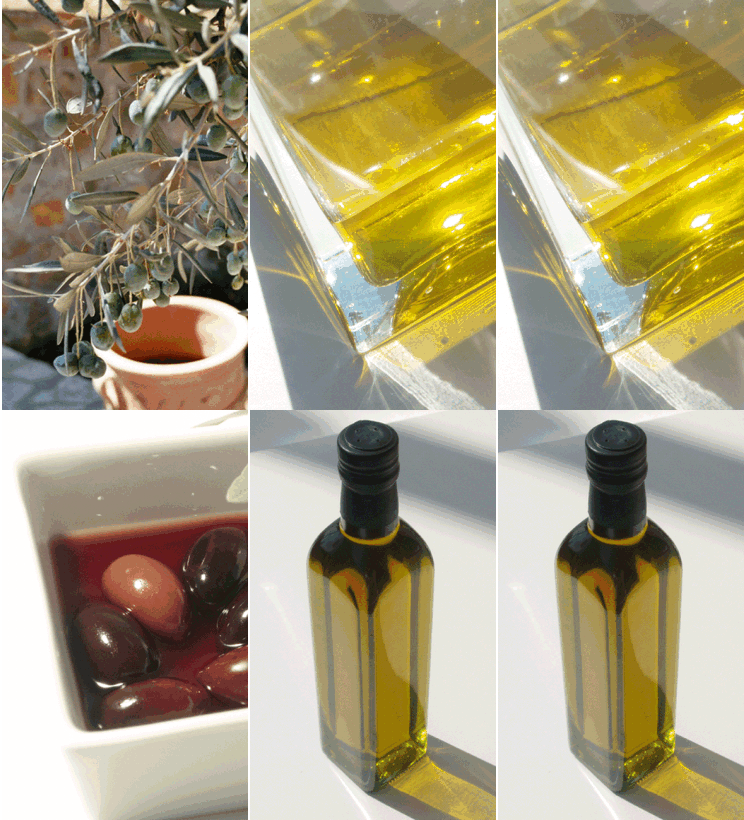
| Olives
are one of the most popular and healthy appetizers and cooking
supplements. They appear all time on a Greek table – solely, in
diverse brines, with cheese, in salads, meals…
Depending on the
time when harvested, they are green or black.
Olive
Varieties
Around the World, thousands of olive varieties are existing. They differ
in the shape, ratio between stone and flesh, oil content, taste … Some
of them are suitable only for oil production, some of them only for
eating, some of them can be used for both – oil production and
consumption.
In Greece, the
most popular table olive varieties are Konservoila olive (80% of
the Greek table olive production, known also under various other names
depending on the area of origin; round to oval shape, medium to large
size), Kalamata olive (almond shape, medium size), Chalkidiki
olive (Donkey olive; round shape, very large size).
Olive Colour
The colour of the olive is depending on the stage, when the fruit was
collected from the tree. Every olive is going through the stages green
=>green yellow => yellow=>red =>black.
Green Olives
Olives are collected just before they start to turn red and
ripe. Their flavour has already developed, but it is not sweet. It is a
matter of personal taste preferences and usage occasions, if the
consumer prefers green or naturally black olives.
Black Natural
Olives are collected just after the olive start to turn red,
they are ripe. The flavour has fully developed, their taste is a natural
taste of a mature olive.
Black Comfit
Olives are olives collected green and painted black by oxygen. They
should not be mixed with the naturally black olives. The reason to
colour the olive is mostly to assure a uniform look of the olives in
glass or easier pitting of the olives (mass production). They have a
typical sweet taste. Some groups of consumers are keen on this type of
olive for this typical sweet taste.
Olive size
categories
The size of the olives is depending on more parameters, as for example
the olive variety, climate and weather conditions etc. So when the
olives are collected, they are separated into officially settled size
categories. The size categories are based on the number of olives per 1
Kilogram.:
- Super Mamouth
(91-100)
- Mamouth
(101-110)
- Super Colossal
(111-120)
- Colossal
(121-140)
- Giants
(141-160)
- Extra Jumbo
(161-180)
- Jumbo
(181-200)
- Extra Large
(201-300)
- Large
(231-600)
- Superior
(261-290)
- Brilliant
(291-300)
- Fine (321-350)
- Bullets
(351-380)
|